
New to needlepoint?
Start here
Needlepoint is a little like paint by number with thread. The design is already painted on the canvas, so all you do is stitch over the colors. Here's everything you need for your very first stitch. Get ready to become obsessed!
Step one
What you'll need
Just a few things and you're ready to go.
-
A canvas
The design on the canvas is your map. You simply stitch over each color, so there's no pattern to count or follow.
Shop canvases → -
Threads
You'll hear threads called fibers too, same thing! There are plain ones like wool, cotton and silk, and decorative ones that are often a blend. Your local needlepoint shop (LNS) can pull a thread kit for you (also referred to as kitting).
-
A tapestry needle
These have a blunt tip and a big eye. A size 18 needle works for 13 mesh and a size 22 for 18 mesh. I'll always include one with your canvas!
-
Small scissors
A sharp little pair for snipping threads close to the canvas.
Shop scissors → -
Stretcher bars
Nice to haveA simple wooden frame your canvas is tacked onto. It keeps the canvas taut, so your stitches stay even and the canvas doesn't pull out of shape. Some stitchers love them and some prefer to stitch in hand, so it's really a personal preference! You can find them at your LNS.
-
A needleminder
Nice to haveA two-piece magnet that clips onto your canvas, one piece on the front and one on the back. It holds your needle when you take a break, so it never wanders off into the couch.
Shop needleminders → -
A project bag
Nice to haveKeeps your canvas, threads and tools together, at home or on the go.
Shop project bags →
Step two
Your first canvas
For your first project, look for a design with simple blocks of color and not a lot of fine detail.
13 mesh
Mesh is the number of holes per inch. 13 mesh has bigger holes, so it's quicker to stitch and easy on the eyes. A good place to start for beginners!
18 mesh
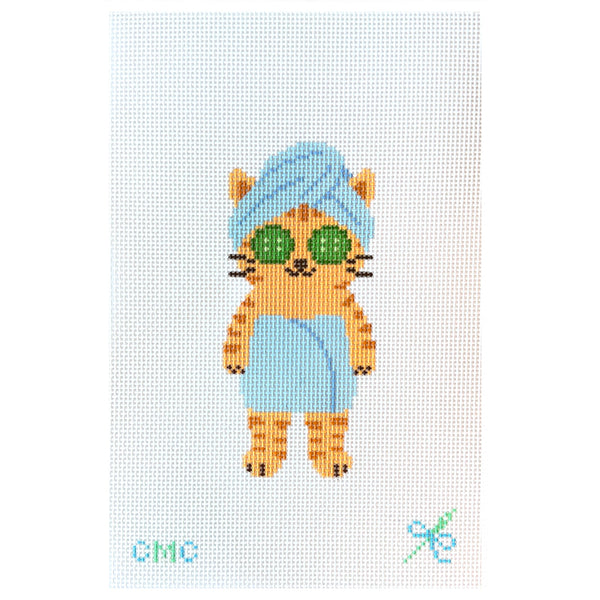
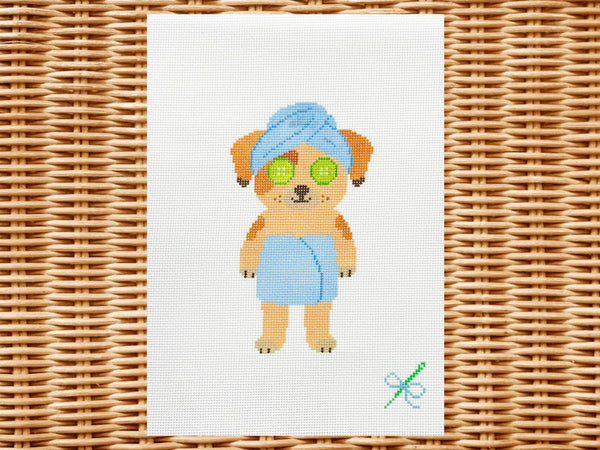
18 mesh has smaller holes and finer detail. Pick one with simple color blocks, like Spa Doggy, and you'll do great.
13 mesh
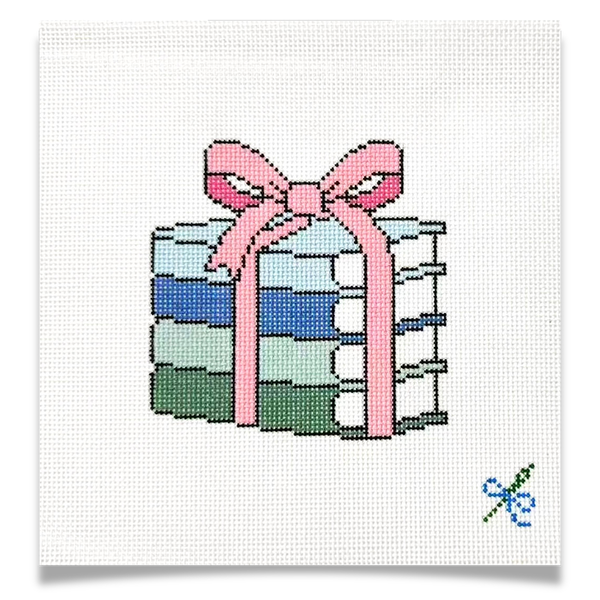
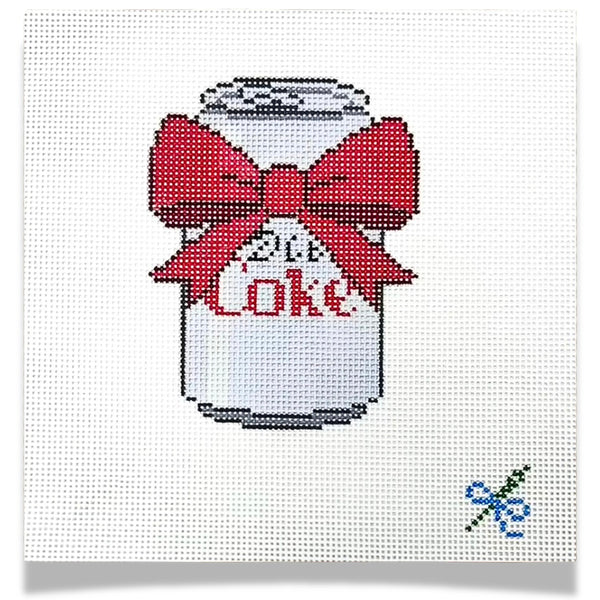
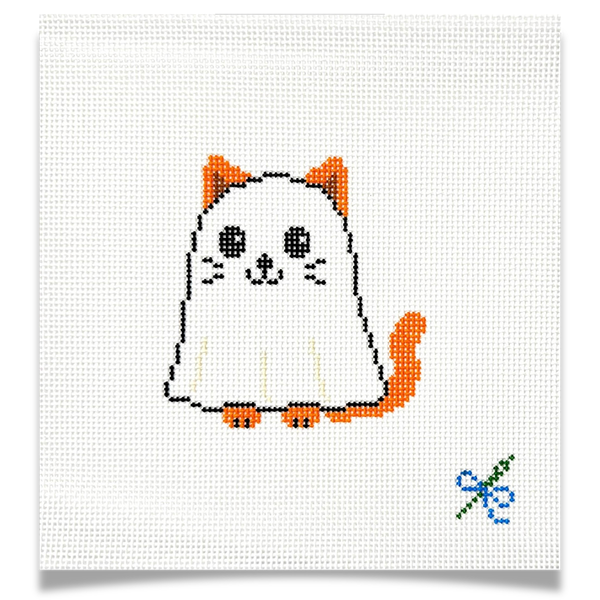
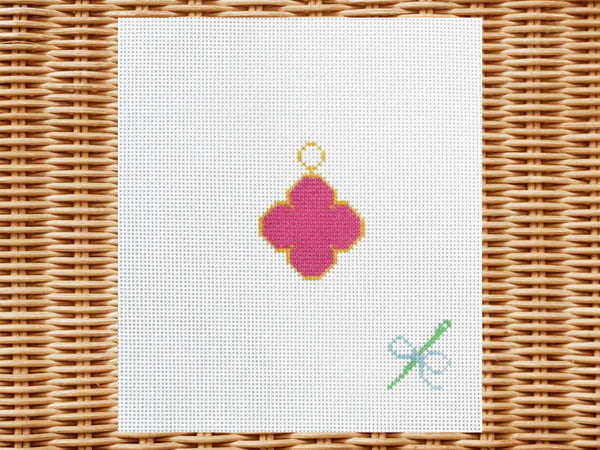
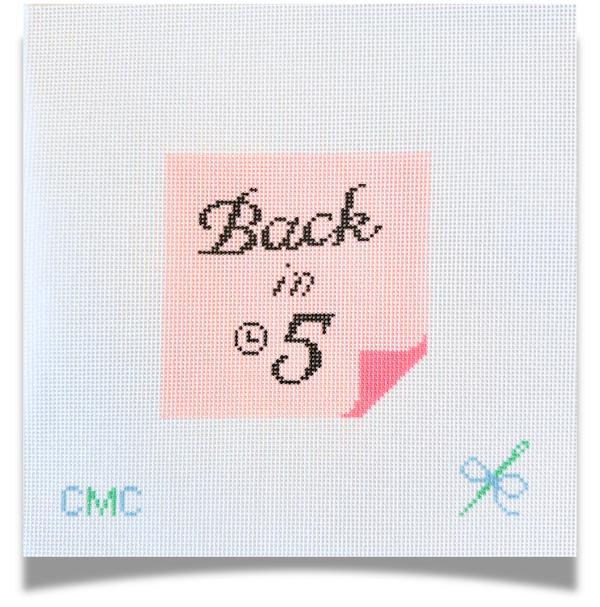
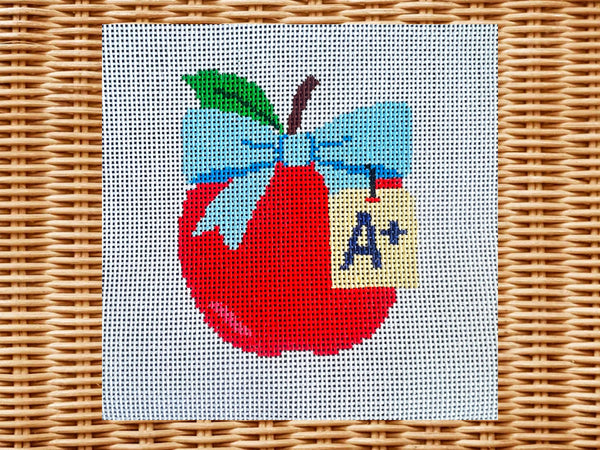
Here are a few of my 13 mesh canvases that are easy for beginners because the holes are bigger and the designs are simple, so they stitch up quickly.
18 mesh
Here are a few of my 18 mesh canvases that are easy for beginners because they have simple blocks of color and not a lot of fine detail.
Step three
Your first stitch
The tent stitch is the bread and butter of needlepoint and the easiest way to start. It's a simple diagonal stitch. The most common are basketweave and continental. Both are 1 over 1, meaning each stitch goes over one intersection of the canvas.
Two ways to stitch it
Both make the same stitch on the front. Basketweave looks woven on the back and helps keep the canvas from pulling out of shape.
-
Cut and thread
Cut a piece of thread about 18 inches long. Longer pieces tangle and wear thin. Then use a needle threader to pull the thread through the eye of your needle.
-
Start with a waste knot
Tie a knot at the end and push your needle down from the front, about an inch away from where you'll start. As you stitch toward it, your stitches cover the thread on the back. Then snip the knot off.
-
Make a stitch
If you're starting with basketweave or continental, come up through a hole from the back, then go down through the hole diagonally up and to the right. That's one stitch! It goes across one intersection of the canvas.
-
Keep going
Make every stitch slant the same way and keep your tension relaxed, so the canvas stays flat. Stitch one color at a time and fill in the painted areas.
-
Finish your thread
When you have a few inches left, weave the end under a few stitches on the back and snip it. No knots needed.
Step four
When you're done
Once your canvas is stitched, it can be finished into something you'll use and love. Finishing is done by a needlepoint finisher, and your LNS can usually send it out for you. Some LNSes now offer self-finishing classes too!
Some ways to finish are:
You might be wondering
What's the difference between a printed and a painted canvas?
A printed canvas has the design printed on by a machine, so the colors don't always line up with the holes and it can be tricky to tell which color goes where. A hand-painted canvas is painted by hand, so each color sits right where your stitches go and it's much easier to follow. Mine are always hand-painted!
Is this the same as cross stitch?
Nope! Cross stitch is done on soft fabric, usually by counting from a chart, and each stitch makes a little X. Needlepoint is stitched on a stiff canvas with the design painted right on it, and the basic stitch is a single slant. You cover the whole canvas, background and all, so the finished piece is sturdy enough to become an ornament, pillow or bag charm.
Do I need to know how to sew?
Not at all. Needlepoint is just one little stitch, repeated. If you can thread a needle, you can do this.
What threads should I start with?
A plain thread is smooth and easy to work, so it's a great place to start. My favorites for 13 mesh are Silk & Ivory or Milan, and for 18 mesh, Vineyard Silk or Pepper Pot. Once you're comfortable, you can try decorative threads. They're often blends with a little sparkle, sheen or texture and are so fun for details. Some stitchers love using only plain threads and don't use decorative threads at all, which is totally fine too! You can find threads at your LNS. If I can't make it to an LNS, my favorite place to shop for threads online is KC Needlepoint.
How much thread do I need?
It depends on the size of the canvas and how much of each color there is. Your LNS can look at your canvas and pull the right amount for you.
What are decorative stitches?
Once you know the tent stitch, there are lots of other stitches that add texture and pattern, like a knit look on a sweater, a woven look on a basket or a little crunch on a cookie. Some even go straight up and down or across instead of diagonally! They're totally optional but so fun to try. Some stitchers love sticking with basketweave and continental and don't use decorative stitches at all, which is totally fine too! My favorite book for learning them is The Needlepoint Book by Jo Ippolito Christensen.
What if I make a mistake?
No big deal, it happens to every stitcher! Taking stitches out even has a name: frogging (as in "rip it, rip it"). Gently pull the thread back out with your needle, or snip the stitch on the back and pick it out. The canvas is very forgiving, so you can always try again.
How long does it take to stitch a canvas?
It depends on the size of the design, the mesh (13 or 18) and the stitches you use. 1 over 1 stitches, like basketweave or continental, take longer than decorative stitches that cross more than one intersection at a time. It also depends on whether you're a fast or slow stitcher. There's no right or wrong way to do it! Some stitchers love a long, leisurely project and some like to finish quickly.
Do I have to stitch the background?
The background is the plain area around your design. Most stitchers fill it in, so the finished piece looks full and even. It's also often the most relaxing part, perfect for stitching while you watch a show! Then stitch 2 to 3 extra rows all the way around the outside, so when the finisher folds the canvas over, you don't lose any of your design.
Where can I find stitching inspo?
TikTok and Instagram are full of stitchers sharing their work. KC Needlepoint's Stitch Vault is a great place for stitch ideas!
Ready to stitch?
Pick a canvas you love and grab your free project tracker to keep your threads and notes in one spot.